Rotary cut
The first stage supplied the focused cutting action needed to begin breaking down the Thunderbird’s dense wash marring and more established defects.
 Book now
Documented result · 2002 Ford Thunderbird
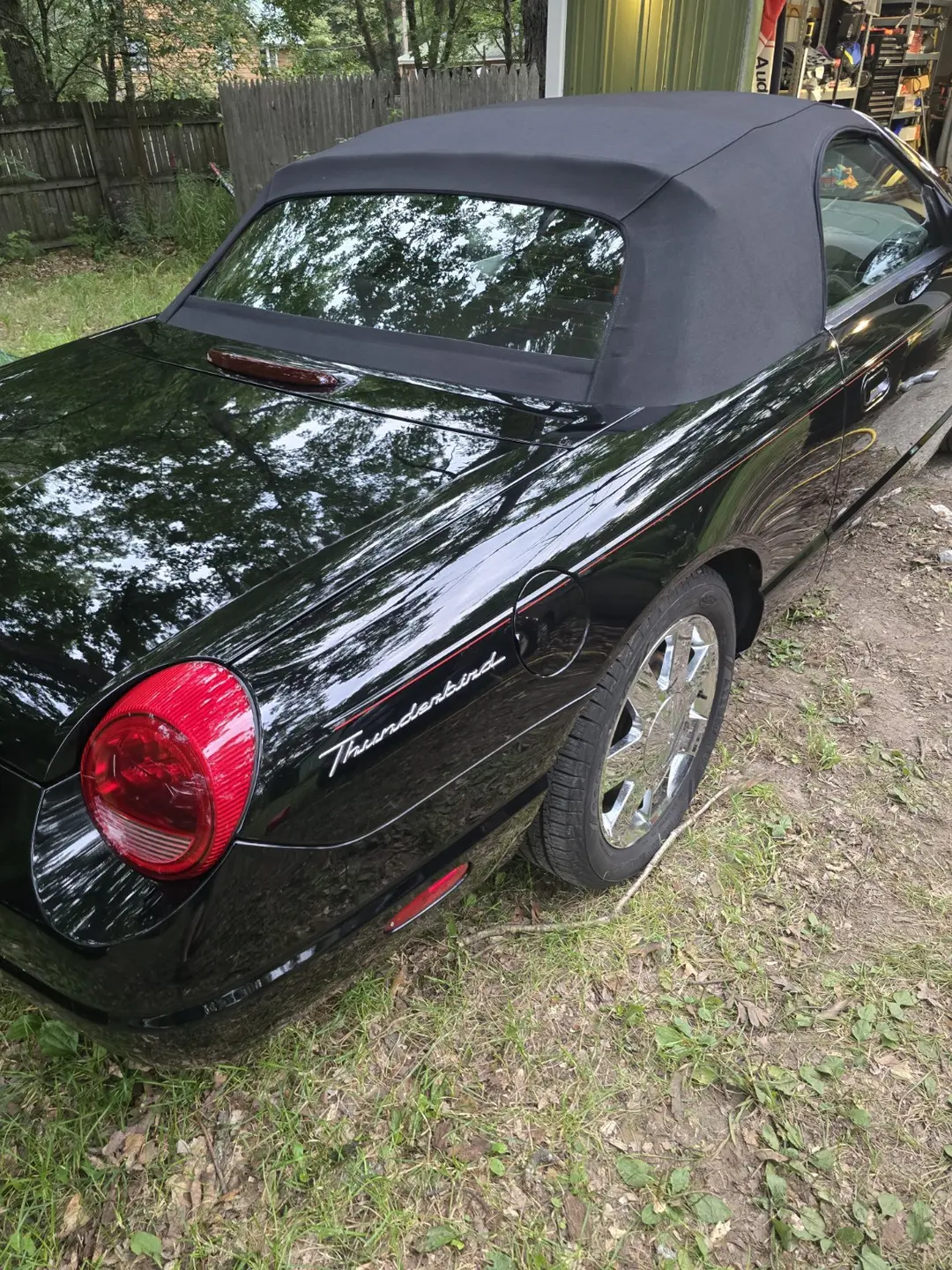
Years of dense wash marring had turned this Thunderbird’s black finish into a veil of gray under direct light. Roughly 30 hours and four distinct polishing stages later, the paint could reflect cleanly again.
The assignment
The starting finish carried extensive circular wash marks, fine scratches, and haze across the upper surfaces and quarters. On black paint, each defect interrupted the reflection and made the color appear flatter than it was.
The goal was visible, responsible transformation: remove the defects the paint could safely give up, refine the finish through progressively finer stages, and preserve the clarity that process revealed.
The correction sequence
One aggressive pass cannot deliver both serious defect removal and a jewel-like finish. This process stepped down deliberately—from correction to refinement—using RUPES products throughout.
Correction creates the improvement. Refinement makes that improvement look expensive.
The first stage supplied the focused cutting action needed to begin breaking down the Thunderbird’s dense wash marring and more established defects.
A forced-rotation machine with microfiber continued the correction with consistent pad movement and controlled defect removal across the larger panels.
Forced rotation with foam refined the cutting stages, reducing their residual haze and rebuilding the clarity black paint demands.
A dual-action foam jeweling stage chased the final increment of finish quality—sharpening reflection, deepening the black, and leaving a clean base for protection.
Before & after
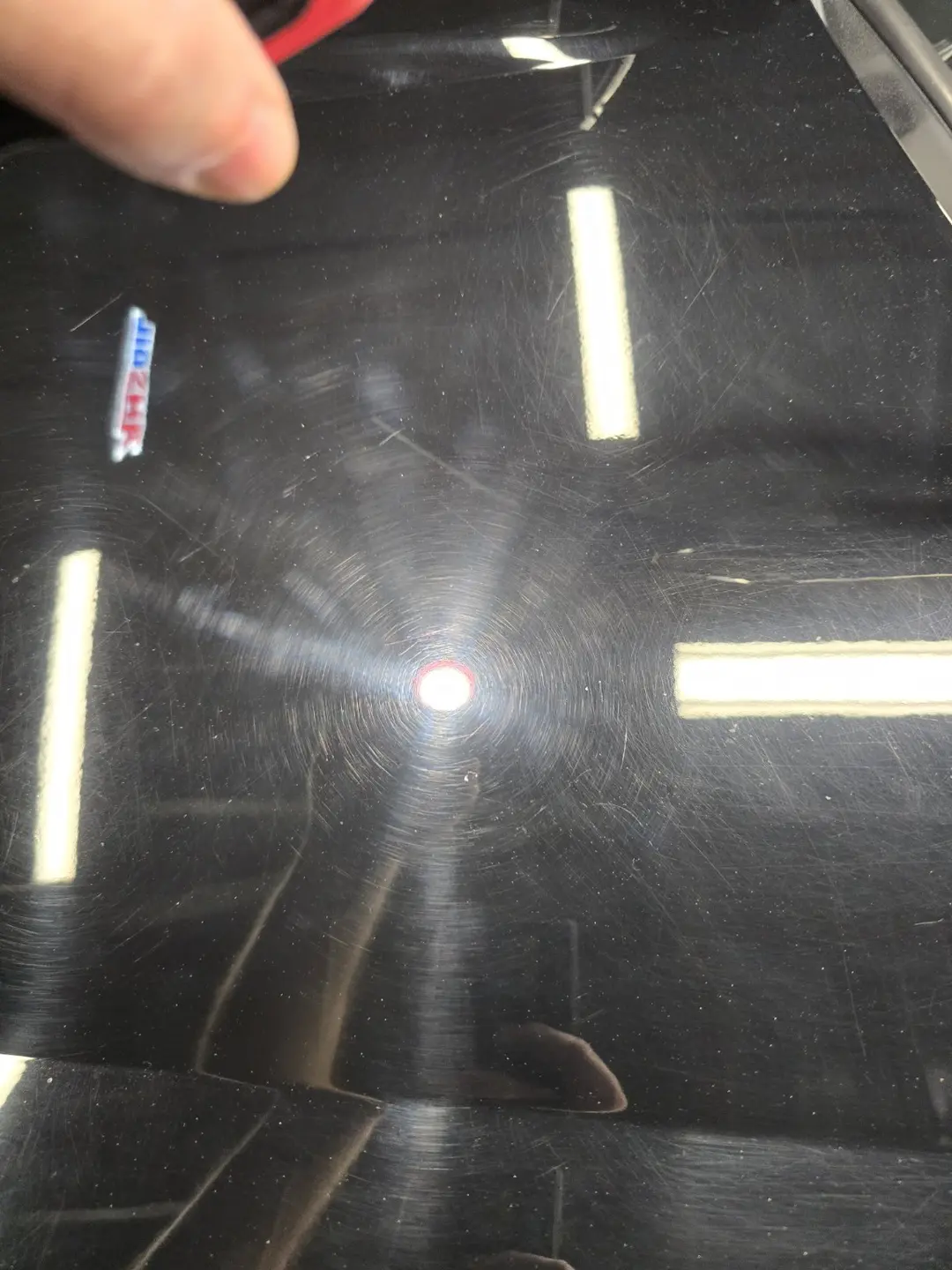
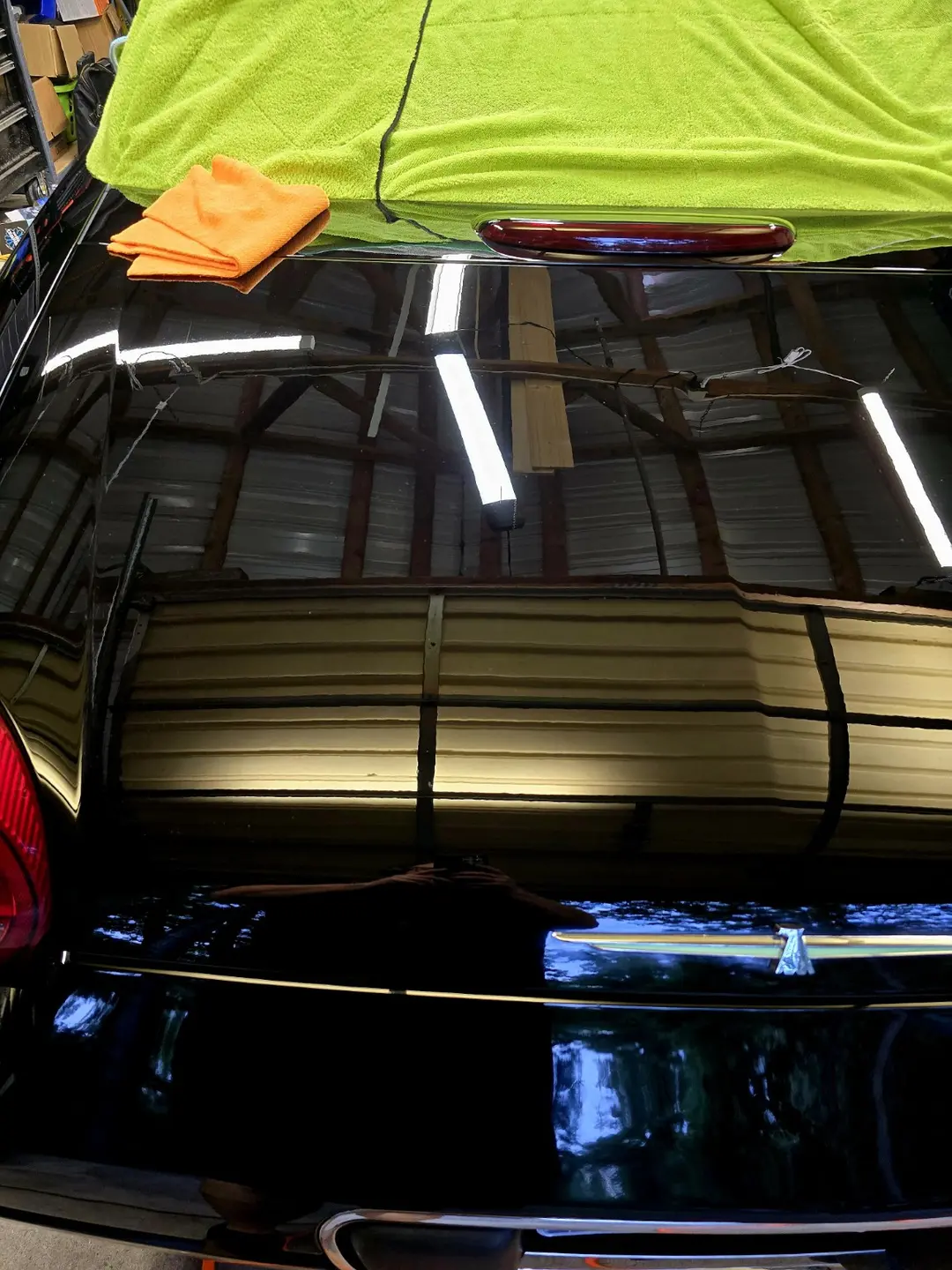
Inspection lighting exposes what ambient light can hide. Before correction, the concentrated light fractured across thousands of fine defects. After refinement, workshop and outdoor reflections read with far greater continuity and depth.
Decklid · primary evidence
The decklid provides the clearest record of the change: heavy wash marring under inspection light before, then a deep and dramatically cleaner reflected image after the jeweling stage.
 Before
 After
AfterUpper surfaces
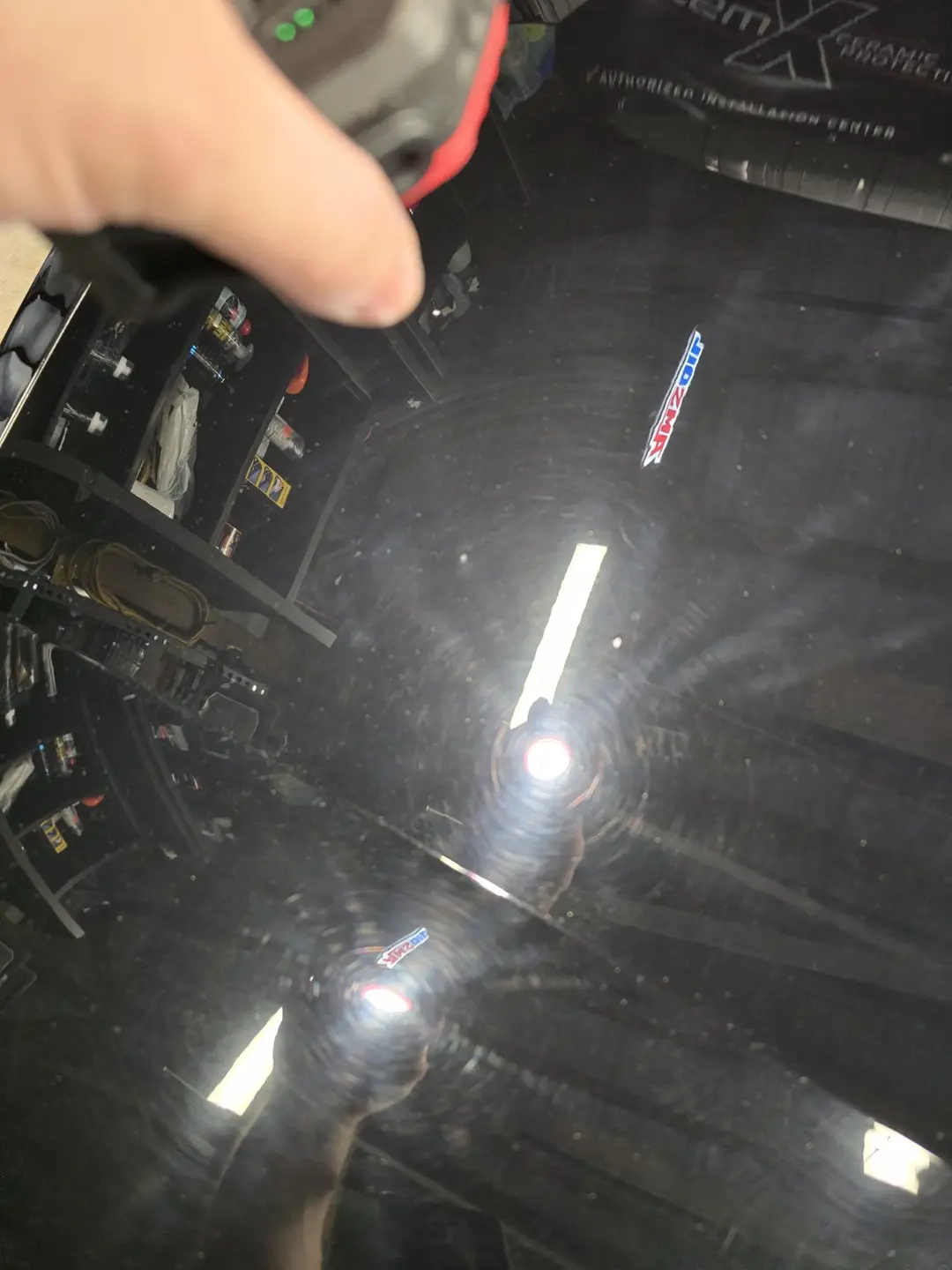 Before
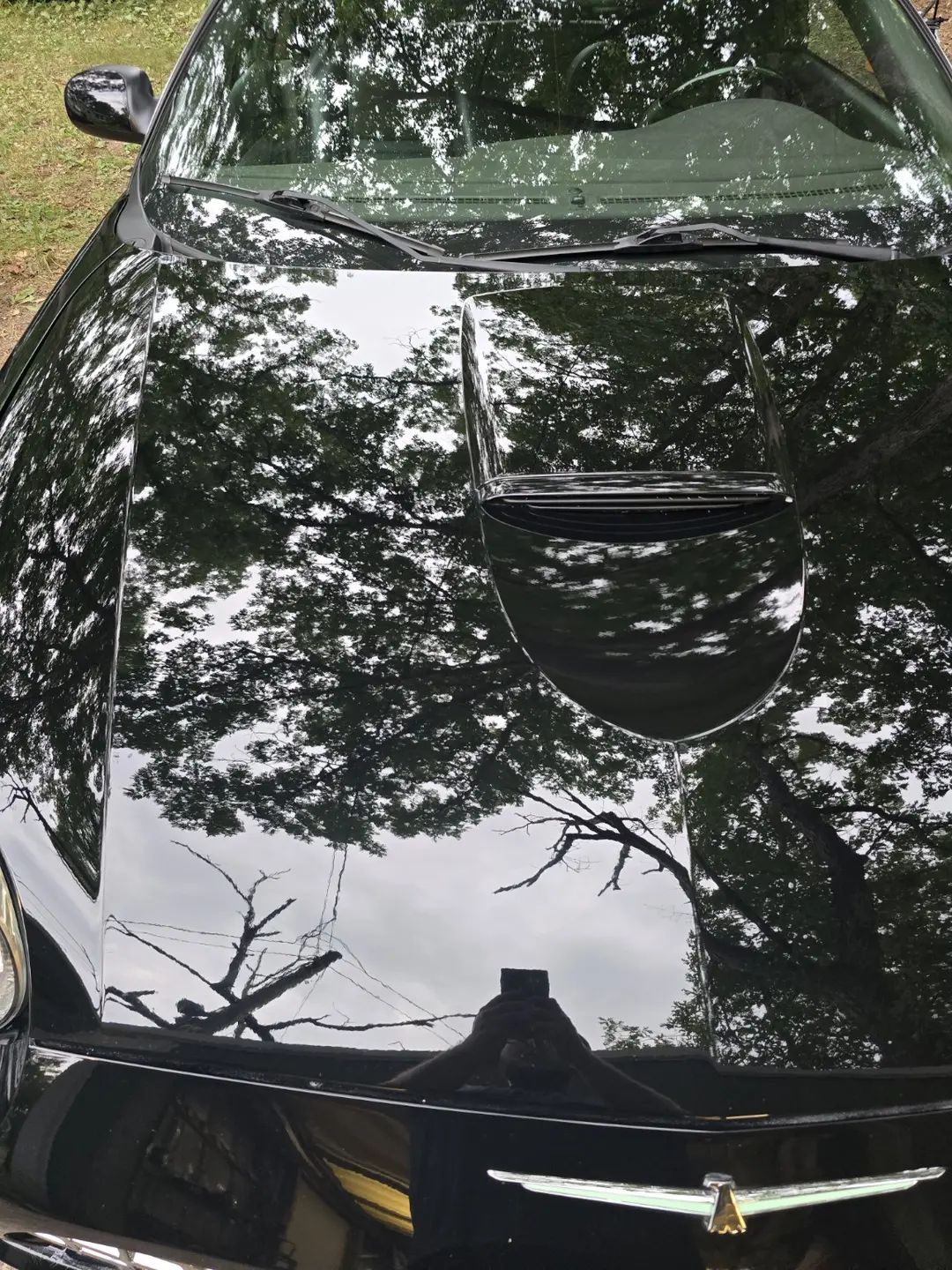 After
AfterRear quarter
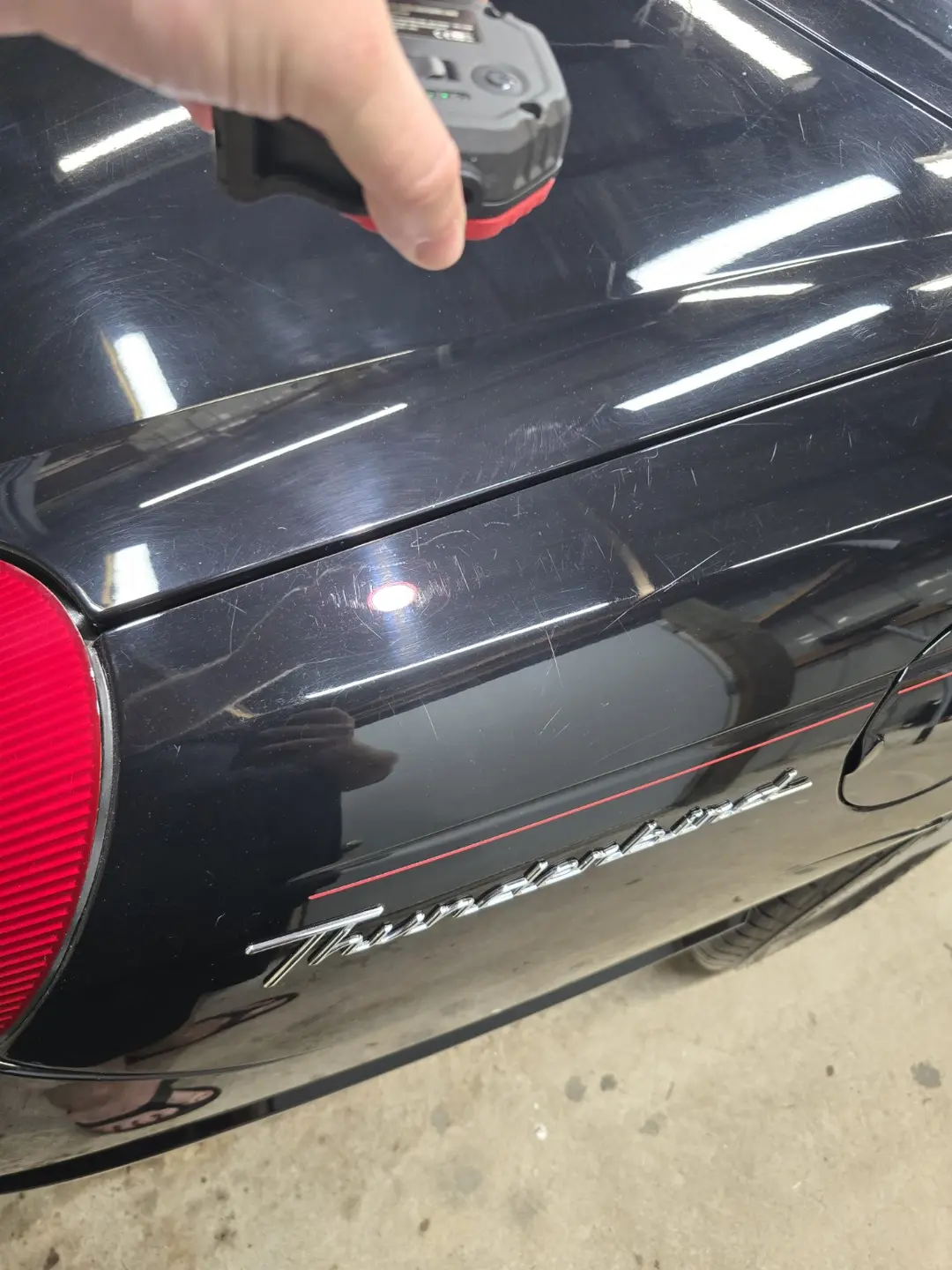 BeforeAfter
A note on the photographs: the before images were intentionally captured under concentrated inspection lighting, while the completed vehicle was documented in workshop and outdoor light. Different lighting changes how defects appear; these images are presented as a record of the project, not as a laboratory-controlled comparison.
The finishing choice
Once the polishing sequence was complete, the finish received a graphene paste wax. The wax added a renewable sacrificial layer, enhanced water behavior, and gave the freshly refined black paint its final visual richness.
This project was protected with wax—not represented as a ceramic coating. Owners who want longer-term chemical resistance and easier maintenance can pair this level of preparation with a professionally installed coating instead.
Compare ceramic protection →Explore every documented result →Muskegon & surrounding West Michigan
Send a few direct-light photos and the result you want. ShineLab will explain what the finish appears capable of—and what has to be inspected in person.